At the start of 2026, we predicted that the firms that win wouldn’t be the ones endlessly experimenting with new tools — they’d be the ones that moved decisively from ideation to execution using clean, structured data. Six months in, that prediction is holding. The firms seeing real ROI from their legal AI strategy aren’t running the most sophisticated models. They’re running them on better data.
The State of Legal AI Right Now
AI in legal tech has shifted from experimentation to expectation. Firms are buying AI tools, partnering with vendors, and building proprietary solutions. The question is no longer “What can AI do for my firm?” The firms thinking ahead are asking something sharper: What can AI do for my firm that cannot be replicated by anyone else?
The answer lives in your data.
AI no longer just surfaces institutional knowledge — with reliable data, it becomes the engine that puts that knowledge into action. As firms invest in AI solutions and integrate them into workflows, the outputs will reflect the firm’s diligence in collecting, managing, and maintaining quality data.
Which means it’s time to shine a spotlight on your data — the good, the bad, the incomplete, the obsolete.
Your AI is ready for its moment. The question is whether your data knows its lines.
The Hidden Cost of Poor Data Quality
AI doesn’t evaluate the quality of its inputs. It confidently works with what it’s given. In most industries, that produces inconvenient outputs. In legal, it produces risk.
Three ways poor data quality shows up in AI outputs, often without warning:
- Incomplete data: Your AI tool doesn’t flag what’s missing — it works around it. Gaps in matter history, lawyer experience, or outcome data produce answers that feel complete but aren’t. In legal, that’s the kind of confidence that creates real exposure.
- Inconsistent data: The silent killer of competitive intelligence and personalized AI. When the same concept is classified differently across records — a matter tagged three different ways, a practice area named inconsistently — AI can’t surface reliable patterns. The context-aware outputs firms want in 2026 require consistency underneath.
- Stale Data: AI presents outdated information with the same authority as current information. In a legal market where lateral movement, matter outcomes, and competitive positioning shift constantly, stale data doesn’t just limit insight. It actively misleads.
What Good Data Quality Unlocks in Your Legal AI Strategy
When firms get this right, the capabilities that seemed aspirational in January start to feel achievable.
Better research: Surface relevant precedents, comprehensive judge and lawyer profiles, and matter history faster. Needle-in-a-haystack research questions become rewarding to answer because you have the data points to get granular. Your research team can stand behind the results — not because the AI is smarter, but because the data underneath it is trustworthy.
Actionable insights: Experience management systems surface hidden insights and connect the dots faster when powered by complete, accurate data. Institutional knowledge stays at your fingertips — and doesn’t walk out the door when a partner leaves.
AI outputs that drive results: Associates orient faster. Partners make better-informed decisions. AI recommendations are only trustworthy when the signals they read are accurate — data quality is what separates a recommendation you act on from one you second-guess.
Introducing Your Firm’s People Data Foundation: CI’s MCP Server
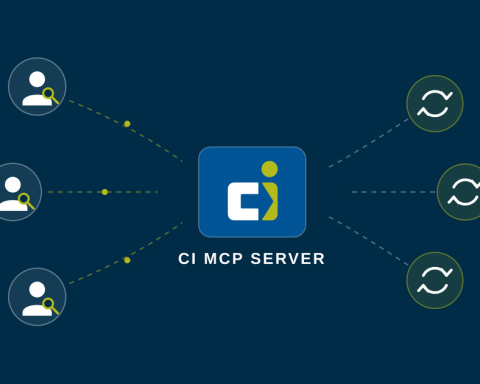
The Courtroom Insight (CI) MCP Server is an open standard, native integration that connects Courtroom Insight’s legal professional intelligence directly to AI systems — enabling law firms, corporate legal departments, and other organizations to surface more accurate, reliable outputs. Firms can access intelligence on lawyers, judges, expert witnesses, arbitrators, and mediators directly within their preferred AI platforms. No exports, no reformatting, no manual lookups.
What the CI MCP Server puts at your fingertips:
- CI Biographies: Verified biographical data on lawyers, expert witnesses, judges, arbitrators, and mediators.
- Firm Relationships: Connections between firm lawyer and other legal professionals, revealed through prior clerkships, work history, and more.
- Private Reviews and Research: Internal reviews and prior research, surfaced in context.
- Expert Challenges and Analytics: Daubert Challenge outcomes and motions to exclude expert testimony, organized and ready to query.
- Opinion Summaries: Structured summaries of judicial opinions, indexed for semantic retrieval.
This is what happens when the data infrastructure CI has been building — clean, structured, taxonomy-driven, enriched — meets the next generation of AI connectivity.
The Bottom Line
The hype cycle in legal tech is giving way to accountability. Firms aren’t asking what tools to buy anymore — they’re asking why the tools they already bought aren’t delivering.
The answer, almost always, starts with the data.
We said 2026 would be the year of data that delivers. The CI MCP Server is part of what that delivery looks like. The firms that will benefit most aren’t waiting for a new product to solve the problem — they already decided that clean, structured, connected data wasn’t optional.
That decision compounds. And the time to make it is now.
Transform Your Firm’s Legal Professional Intelligence
Ready to put the CI MCP Server’s clean, structured, connected legal professional data to work in your AI systems? Contact our team at sales@courtroominsight.com to set-up a quick call.