Law firms get more accurate AI results when their AI tools are grounded in clean, connected people, company, and matter data.
Over the past couple of years, nearly every conversation I’ve had with a client has turned to AI. Firms have made real investments in large language models. While the tools are impressive, the same frustration kept [JB1] coming up.
A partner asks the AI who has handled a certain type of matter against a certain opposing counsel. The answer comes back fast and reads well. Then someone checks it, and the names are off. The matter history is incomplete. Two people with the same name are blended into one. A company shows up under three different spellings.
AI wasn’t the problem. The underlying data was.
I have heard different versions of this story from library teams[JB2] , knowledge management leaders, and business development groups. Each time, it reinforced something we’ve believed at CI from day one: your answers are only as good as the data behind them. We built the CI MCP Server to close that gap.
Why AI Results Are Inaccurate at Law Firms: LLMs Are Better With Good Data
LLMs are fantastic at surfacing information. Out of the box, they’re impressive. But out-of-the-box performance is a starting point, not a ceiling.
An LLM can only reason over what it’s given. At most firms, the data it’s given looks like this:
- People records that don’t match across HR, timekeeping, CRM, and experience systems
- Company names entered a dozen different ways, with no link between parents and subsidiaries
- Matter records that live apart from the external docket data that tells the full story
- No reliable link between the person, the company, and the matter
- Information from the Internet
Feed that into an AI tool and you get confident answers built on shaky ground. That’s where most AI accuracy problems at law firms start.
This is why CI invests so heavily in cleaning, matching, and enriching people, company, and matter data. When the data is structured and reliable, the AI has something real to work with. That’s how firms get the most value out of the LLM investments they’ve already made.
Context Matters: Ground Your AI in Your Firm’s Real Data
An answer is only useful if it reflects specific, accurate information. A generic answer about “experienced litigators in product liability” doesn’t help a partner staffing a case or a BD team building a pitch. They need to know who at their firm has done the work, for which clients, against which parties.
That requires context. Connected AI can ground its output in the firm’s real data instead of guessing from whatever it can find.
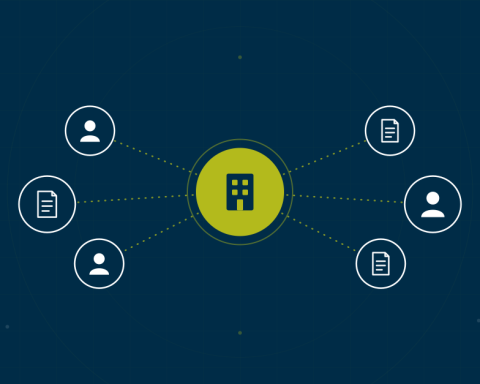
For law firms, the most valuable context sits at the intersection of three things:
- People: lawyers, judges, expert witnesses, opposing counsel, and alumni
- Companies: clients, adverse parties, and their corporate families
- Matters: the work itself, from internal records and external dockets
The real insight comes from the connections between them. Which of our lawyers has appeared before this judge? Who has worked with this company, and on what? What happened the last time we faced this firm? An AI tool can answer those questions accurately only when people, company, and matter data are cleaned, structured, connected, and enriched first.
Your System of Record Still Matters
There’s a misconception that AI replaces the systems firms already rely on. It doesn’t.
LLMs are great for querying data and presenting results in a way anyone can understand. They are not well designed for contributing information back into a system of record. The places where lawyers record what they know still matter, maybe more than ever.
One of our clients offers a good example. They use the CI People Directory as the system of record for comments about legal professionals. They use Litera Foundation as the system of record for comments about the firm’s matters.
Those comments are where lawyers share the secret sauce: why a particular experience with a specific judge, expert, or opposing counsel turned out well or badly for their client. That institutional knowledge is some of the most valuable data a firm has. It’s also usually scattered or not shared by the lawyers with the relevant insights.
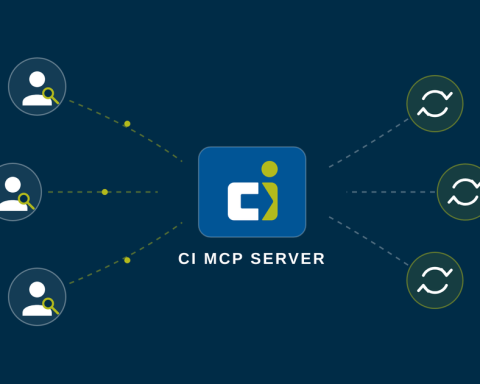
In this client’s case, both repositories are pushed back to CI. Our customized MCP server then surfaces them together, in one unified view. Lawyers can ask a plain-language question and understand the firm’s prior experiences and best practices, based on unified data about the parties, the people, and the type of matter.
The systems of record stay where they are. Lawyers keep contributing where they already work. The AI simply gets to see all of it, connected.
A Final Word
When we started CI, the goal was to get firms the data they need, right where they need it. AI hasn’t changed that mission. It’s made it more urgent. The firms getting the most accurate AI results aren’t the ones with the flashiest tools. They’re the ones that took their data seriously first. The CI MCP Server is how we help firms do exactly that.
We built it so firms don’t have to rip and replace anything. Bringing in private firm data is optional, and firms decide what the AI can see. The goal is simple: make the AI investments firms have already made far more accurate and far more useful.
If your firm is working through AI accuracy, we’re here to help you through your unique circumstance. Contact sales@courtroominsight.com to see the CI MCP Server in action.
Frequently Asked Questions
How can law firms improve AI accuracy?
Law firms improve AI accuracy by grounding their AI tools in clean, connected data. When people, company, and matter data is cleaned, structured, connected, and enriched, an LLM can return answers based on the firm’s real records instead of incomplete or conflicting information.
Why do AI tools give inaccurate results about people, companies, and matters?
Most inaccurate results come from messy source data. Duplicate names, inconsistent company records, and matter data disconnected from external dockets lead the AI to blend, miss, or misattribute information.
What is an MCP server for law firms?
An MCP (Model Context Protocol) server lets a firm’s AI tools pull trusted data from a specific source when answering a question. The CI MCP Server gives AI tools access to curated people, company, and matter data and the connections between them.
Does AI replace a law firm’s system of record?
No. LLMs are excellent at querying and presenting information, but they aren’t designed to capture information back into a system of record. Firms keep contributing in tools like the CI People Directory and Litera Foundation, and the CI MCP Server surfaces that data together.
Do firms have to share private data to use the CI MCP Server?
No. Including private firm data is optional. Firms choose what data their AI tools can access.